Topics: Commercial Electrical
Hiring an electrician for a business is not the same as hiring someone to swap a light fixture at home. Commercial work involves permits, inspections, landlords, general contractors, tenants who need to keep operating, and equipment your business depends on every day. The right contractor makes all of that run quietly in the background. The wrong one can leave you with failed inspections, schedule slips and a space you can’t open on time. Here is what to check before you sign.
Choosing a Commercial Electrical Contractor in Las Vegas Starts With the License
In Nevada, electrical contracting is licensed by the Nevada State Contractors Board. The classification for electrical contractors is C-2. Before anything else, ask for the contractor’s license number and look it up yourself on the Board’s website. Confirm three things:
- The license is active and in the company’s name, not just an individual’s.
- The classification covers electrical work. A general contractor’s license or a different specialty license is not the same thing.
- The monetary limit fits your project. Nevada licenses carry a limit on the size of the jobs a contractor can take on. A small tenant refresh and a full build-out of a multi-suite building are very different jobs.
For reference, Clark Electric LV, LLC holds Nevada contractor’s license #0090193, Class C-2, with a $1,000,000 limit. Any contractor you are considering should be able to give you the same information without hesitation.
Insurance and Bonding Protect Your Business, Not Just Theirs
Ask for proof of general liability and workers’ compensation coverage, and ask whether the company is bonded. If someone is injured on your property or work damages your building or a neighboring suite, you want that handled by the contractor’s coverage, not your own. Many landlords and property managers in the valley will not let a contractor on site without a certificate of insurance naming them, so it helps to sort this out early rather than on the morning work is scheduled to start.
Make Sure Commercial Work Is Their Normal Work
Plenty of capable electricians focus mostly on homes. Commercial projects bring different equipment and different expectations: three-phase power, larger panels and switchgear, emergency and exit lighting, lighting controls required by energy code, dedicated circuits for kitchens or production equipment, and coordination with fire alarm and low voltage trades. Ask what kinds of buildings the contractor works in most often, whether that is offices, retail, restaurants, warehouses or medical suites, and whether they handle both the power side and the data side of a project.
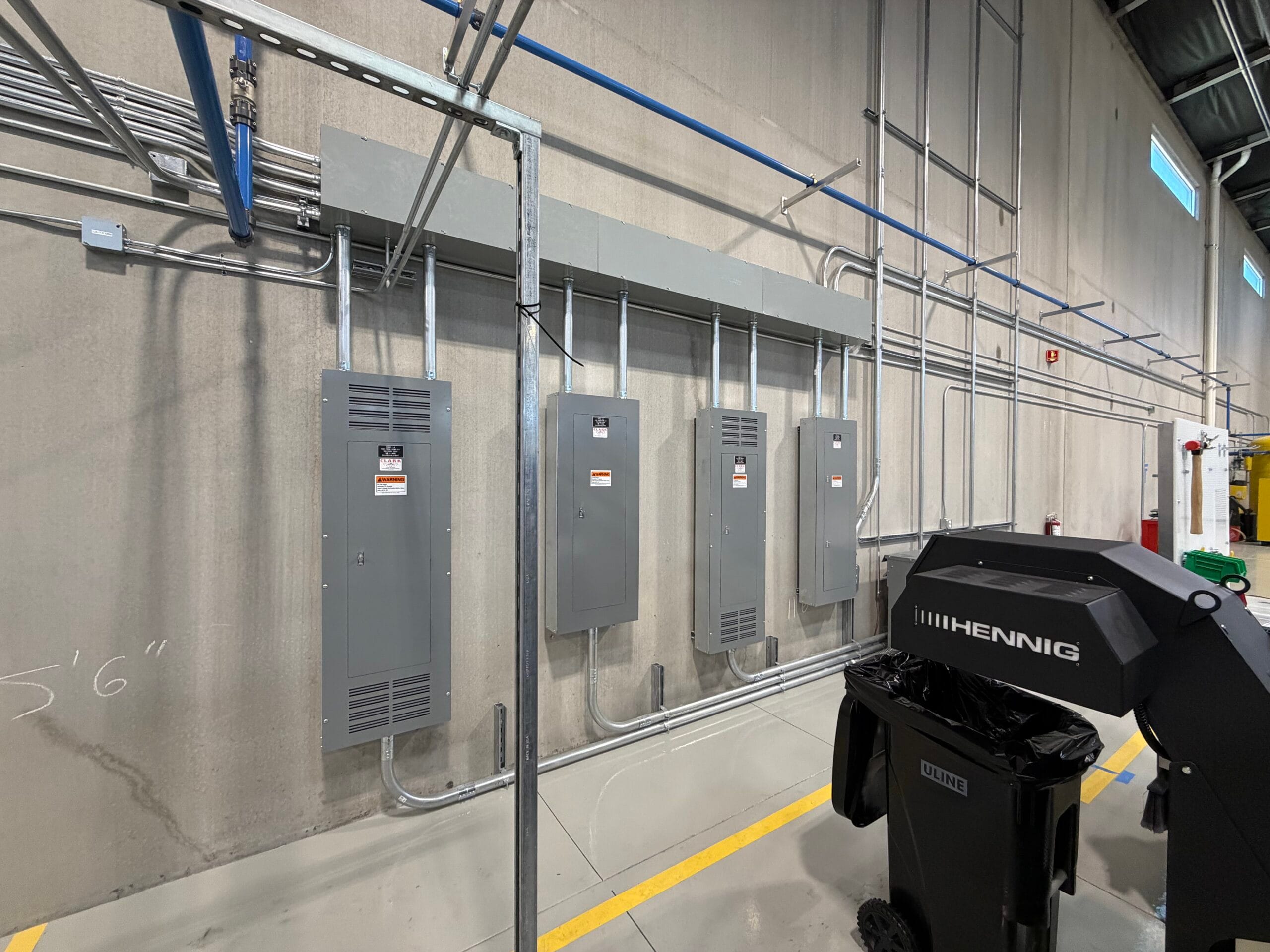
It also helps to know whether they can take on design work. On a commercial electrical project where there are no stamped drawings yet, a contractor who offers design-build can lay out the system, size the service and panels, and carry the job through permitting, which often saves a round of back-and-forth between separate designers and installers.
Get a Clear, Written Scope
Most disputes on commercial jobs trace back to a vague scope. A good proposal tells you exactly what is included and what is not. Look for:
- Which drawings or walkthrough the price is based on.
- Whether permit fees and inspections are included.
- Who supplies fixtures, devices and equipment, and who supplies the panel or transformer if one is needed.
- Whether patching, demolition or removal of old wiring is part of the job.
- How changes will be priced and approved once work is underway.
If you are comparing bids, line them up item by item. A lower number sometimes just means something was left out, such as permit fees or data cabling, that will come back later as a change order.
Ask About Permits, Code and Inspections
Commercial electrical work in Southern Nevada is permitted and inspected by the local building department, whether that is the City of Las Vegas, Clark County, Henderson or North Las Vegas, depending on where your property sits. Your contractor should pull the permit, schedule inspections and handle any corrections. Ask how they approach the National Electrical Code and local amendments, and what happens if an inspector calls for corrections. A contractor who treats inspections as routine, and plans the work to pass the first time, protects your timeline.
Be cautious of anyone who suggests skipping a permit to save time or money. Unpermitted work can cause problems with your landlord, your insurance carrier and future buyers or tenants, and it may have to be opened up and redone.
Scheduling Around a Business That Has to Keep Running
Commercial electrical work rarely happens in an empty building. Ask how the contractor will:
- Plan shutdowns so power is off only when and where it has to be.
- Coordinate with other trades, such as framers, HVAC, fire alarm and IT.
- Keep work areas safe and clean when employees or customers are nearby.
- Communicate progress, and who your single point of contact will be.
Get a realistic start date and an estimated duration in writing, along with an understanding of what could change it, such as equipment lead times or inspection availability.
Tenant Improvements Have Their Own Checklist
If you are leasing space, much of your electrical work will happen as part of a tenant improvement. That brings in the landlord’s requirements, the building’s existing electrical capacity, and sometimes a general contractor managing the whole build-out. Ask whether the electrical contractor has worked on tenant improvements in multi-tenant buildings, how they verify available capacity before committing to a layout, and how they coordinate with property management for access, shutdowns and approvals. If you are early in the process, our guide to planning electrical work for a tenant improvement walks through what to settle before construction starts.
Look at the Whole Picture, Not Just Price
Price matters, but on commercial work the cheapest bid is often not the least expensive outcome. Weigh it alongside how complete the scope is, how clearly the contractor communicates, whether they answered your questions directly, and what you find when you check reviews and references. Ask for references from projects similar to yours and follow up on them. When reviews are mixed, look at how the company responded and whether complaints are about the work itself or about communication.
Questions to Ask Before You Sign
- What is your Nevada license number, classification and limit?
- Can you send a current certificate of insurance?
- Have you done work in buildings like mine? Can I speak to a reference?
- What exactly is included in this price, and what is excluded?
- Who pulls the permit, and who deals with inspections and corrections?
- Who will be my contact during the job?
- How will you schedule shutdowns around our business hours?
- Can you also handle data cabling, security cameras or lighting upgrades if we need them?
Working With Clark Electric
Clark Electric LV, LLC is a licensed, bonded and insured electrical contractor based at 3300 Sunrise Ave in Las Vegas. We handle commercial electrical service, tenant improvements, design-build projects, server rooms, lighting retrofits, parking lot lighting, low voltage cabling and security cameras for businesses across the Las Vegas Valley, with all work done to NEC and Southern Nevada codes. Our office is open Monday through Friday, 7 a.m. to 4 p.m. If you have a project coming up, reach out to us for a free estimate and we will walk through the scope with you.
The best time to vet a contractor is before the walls are open and the move-in date is set. A few phone calls and a license lookup now can save weeks later.
Need a licensed Las Vegas electrician?
Clark Electric LV, LLC handles residential, commercial and low-voltage work across the valley. Call us or send a few details about your project for a free estimate.
Call 702-871-1828Request a Free Estimate